
Grease Traps
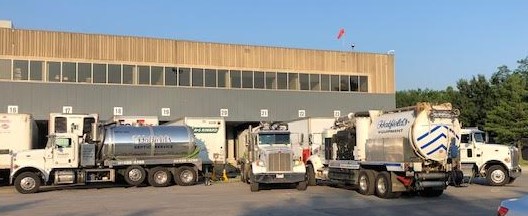
Hatfields provides service for your restaurant's commercial grease trap throughout Maryland including Howard County, Montgomery County and Baltimore County MD.
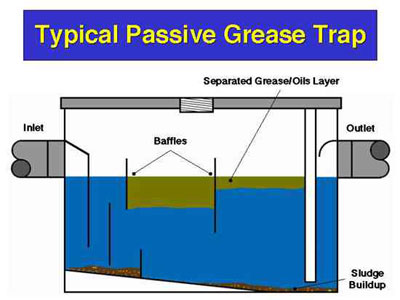
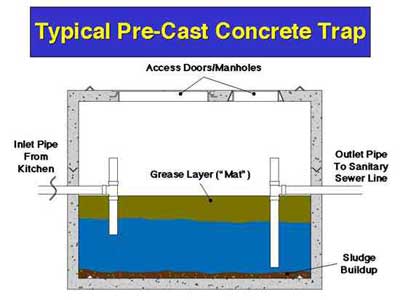
Simply put, a grease trap is a receptacle that kitchen wastewater flows through before entering the sanitary sewer lines. This receptacle captures, or "traps" grease. How? Grease, the industry term for animal fats and vegetable oils, is 10 to 15% less dense, or lighter than water. Grease is also immiscible with water, which is to say it does not mix with water. Thus, grease and oils float on water. When kitchen wastewater flows through a grease trap, the grease and oils rise to the surface and are trapped inside the receptacle using a system of baffles. The captured grease and oils fill the trap from the top down, displacing "clean" water out of the bottom of the trap and into the sanitary sewer line. This is why you see a grease "mat" when observing a grease trap. When a significant layer of grease has accumulated, the trap must be cleaned out.
Disposal of any fat, oil, or grease down a sink or floor drain can cause serious problems for your plumbing system. FOGs can congeal in sewer pipes, pumps, and other equipment, restricting flow of wastewater in the sanitary sewer collection system and eventually cause a back up into the facilities serviced by that pipe.
Is there a difference between grease traps and grease interceptors?
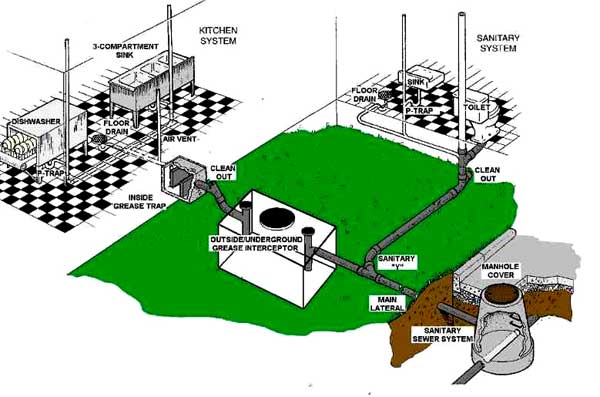
Not really. Both devices do the same thing – separate and retain free floating oils and greases. Small, in-floor or under-the-sink prefabricated steel units are most often referred as grease traps. Grease interceptors are the larger units located outdoors that offer much longer hydraulic retention times.
How can I ensure that my grease trap works effectively?
It is important that your grease trap is properly sized, installed, and maintained according to the manufacturer's recommendations. Proper maintenance will help ensure that your grease trap is functioning properly. Grease trap maintenance is often neglected, so be sure to have the trap inspected and cleaned out regularly.
How do I determine the proper maintenance frequency for my grease trap?
Your maintenance and clean-out schedule should follow the manufacturer's recommendations. It is recommended that you clean your grease trap when the accumulated grease and sediment make up 25 percent of the total liquid volume of the trap. Not every grease trap will require the same maintenance schedule. The amount of grease discharged, the flow volume, and the size of the grease trap will determine the maintenance frequency.
What are some Do's and Don'ts associated with proper grease trap operation?
To avoid excessive FOG discharge or overloading of your grease trap, you can scrape plates into the garbage prior to rinsing or use other dry cleanup practices to reduce the amount of grease that goes down the drain. Other ideas to ensure good operation of your grease trap:
Don't pour fats, oils, or greases down the drain.
Educate your staff on proper cleaning procedure.
Don't let food waste go through the grease trap. It can reduce the trap's effectiveness/capacity.
Regularly inspect and clean out your grease trap.
Use an additional grease recovery device to remove grease from sources that adds large amounts of grease to your wastewater, such as pot wash or pre-rinse sinks.
Do not flush interceptor with hot water to clear or clean the grease trap in lieu of pumping out the device.
If a food grinder is determined to be necessary, it must be directly followed by a solids interceptor, and then plumbed to the grease trap.
Install solids interceptors on sinks, dishwashers, and floor drains to prevent solids from entering your grease trap.
Make sure when cleaning your grease trap that each chamber is cleaned out thoroughly. Inspect and then fill up the separator with clean water before you begin discharging.
How do I dispose of the collected FOGs?
Grease and other waste matter that has been removed from the interceptor should not be introduced into any drain, sewer, or natural body of water. This waste matter should be placed in proper containers for recycling or disposal. Recycling of grease is encouraged when feasible.